
Winter Squash Curing: Fall Harvest Temps and Storage
The short answer
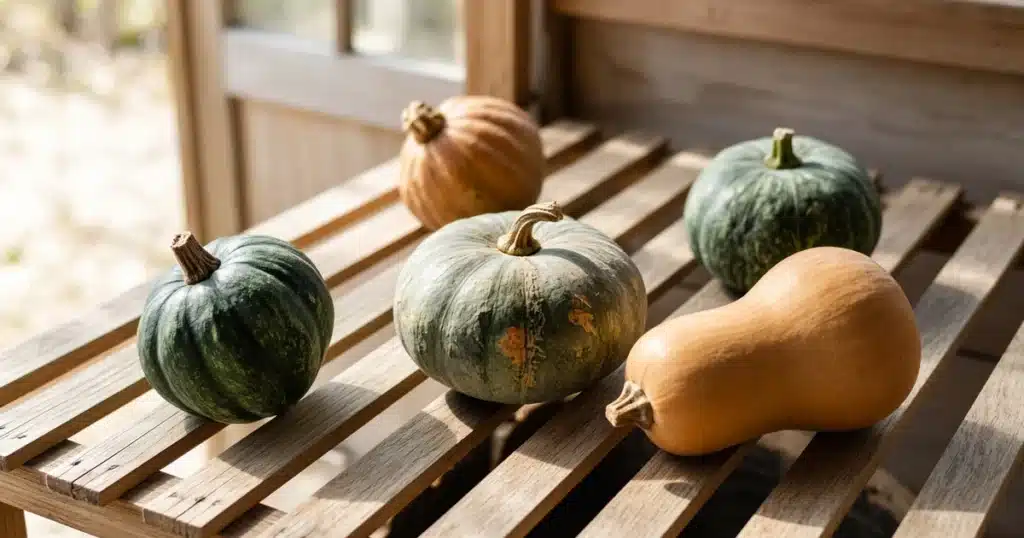
Winter squash curing means holding harvested fruit warm and humid for several days so the rind hardens and small cuts dry over. Most types benefit, but acorn squash does not. After curing, store squash in a cool, dry spot. Chilling below storage range leads to decay, so handle fruit gently and leave stems on.
Curing and careful storage help many squash stay in good shape for months.
Why is curing winter squash worth it?
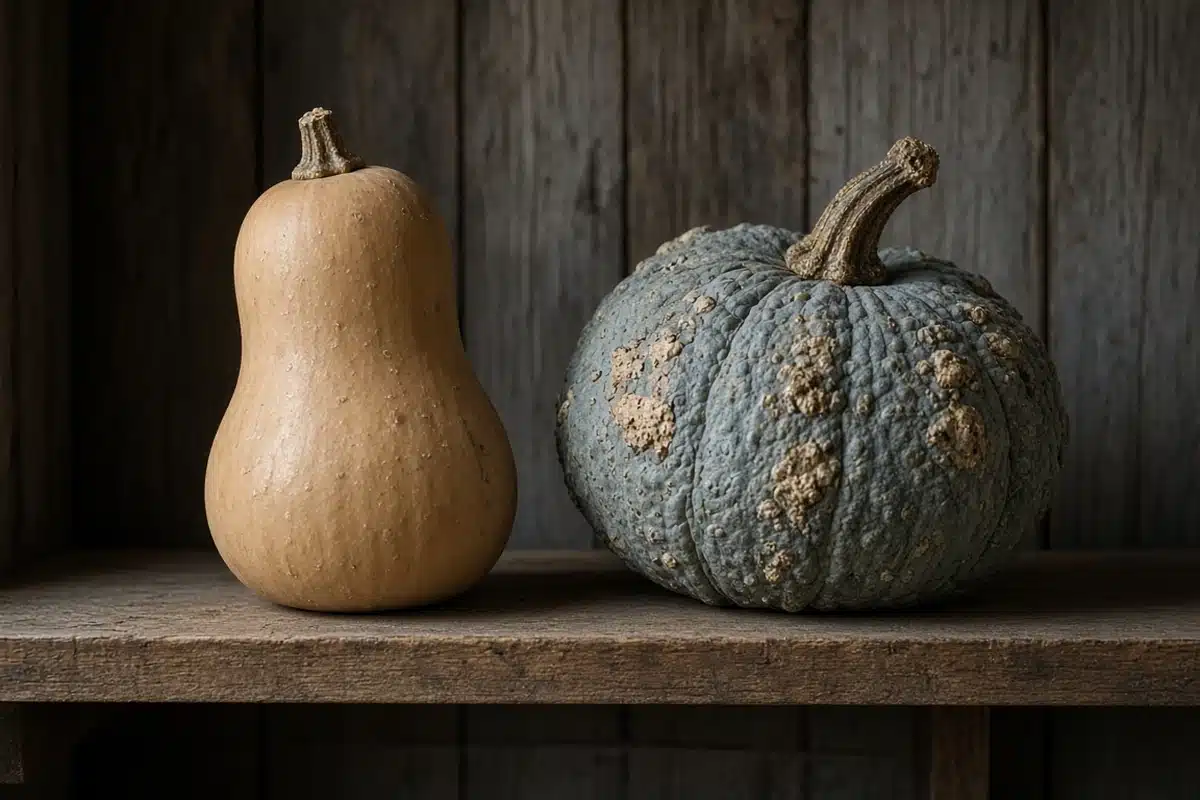
Curing toughens the rind and dries small nicks and scratches. A hard rind slows water loss and blocks rot organisms. Curing helps some types sweeten as starches turn to sugars.
The Iowa State University Extension answer on harvesting and storing winter squash recommends curing most winter squash before storage and notes that acorn squash is the exception.
When should you harvest?
Harvest when the rind is hard and resists a fingernail. The color should be deep and even. The spot where the squash rested on the ground often turns cream or orange.
Harvest before a hard frost. Frost damages fruit and shortens storage life. Our post on frost damage on cannabis shows how cold affects plant tissue.
Cut squash from the vine with pruners, leaving a few inches of stem. Don’t carry squash by the stem. A broken stem opens a door for rot.
Our post on when to harvest outdoor cannabis covers reading ripeness in another fall crop.
How warm and how long should curing last?
Most guides suggest warm temperatures, around 80 to 85 degrees F, with high humidity, for about a week to ten days. A warm room, greenhouse or sunny porch works.
If the weather is warm and dry, some growers handle curing in the field for a week or so. Cover them if frost threatens.
Acorn squash should not be cured. Heat can make it stringy and shorten its storage life.
The University of Kentucky Center for Crop Diversification infographic on postharvest handling of winter squash summarizes curing and storage conditions by type.
| Stage | Conditions | Source |
|---|---|---|
| Harvest | Hard rind, stem attached | Iowa State University Extension |
| Curing | Warm and humid, about 80 to 85 degrees F | Iowa State University Extension |
| Acorn squash | Skip curing | Iowa State University Extension |
| Storage | Cool and dry, about 50 to 55 degrees F | Penn State Extension |
| Avoid | Chilling below storage range | Penn State Extension |
Sources: Iowa State University Extension, Penn State Extension, University of Kentucky.
How should squash be stored after curing?
Store squash in a cool, dry place with good airflow, around 50 to 55 degrees F. A basement, cool closet or unheated spare room often works.
Set squash in a single layer on shelves or racks, not touching. Don’t pile them.
The Penn State Extension article on preventing rot of winter squash in storage explains that chilling below the storage range injures squash and leads to decay. Bruises and broken stems do the same.
How long does winter squash last?
It varies by type. Acorn squash lasts for a few weeks to a couple of months. Butternut and hubbard types can last for several months.
Check squash every week or two. Use any with soft spots right away.
Should squash be stored near apples?
No. Apples give off ethylene gas, which can shorten squash storage life. Store them in separate spaces.
What happens after harvest?
Clear vines and fallen fruit from the garden. Our post on fall garden cleanup after cannabis harvest covers end of season steps.
Which squash types store longest?
Hubbard, butternut and many large pumpkin types store the longest, and their thick rinds hold up well after curing. Buttercup and kabocha types store for a few months and often taste sweeter after some weeks in storage.
Acorn, delicata and spaghetti squash have thinner rinds. Eat them first, within a month or two.
Sort your harvest by type and plan meals around expected storage life. Use any with nicks, soft stems or missing stems first, since they spoil sooner.
Why does handling matter so much?
Every bruise and scrape can become a starting point for rot. Squash look tough, but drops and rough handling cause hidden damage.
Set squash down gently in a padded crate or basket at harvest. Carry them in your arms or in a cart, not by the stem. A little care here pays off for months.
How to: step by step
- Harvest when the rind resists a fingernail.
- Cut with a piece of stem attached.
- Hold squash warm and humid for several days.
- Skip curing for acorn squash.
- Store cool and dry with airflow.
- Check stored squash often for soft spots.
Wipe squash clean with a dry cloth before storing. Avoid washing them.
Troubleshooting
Squash rots early. It was chilled or bruised. Store warmer and handle gently.
Soft rind. It was harvested early. Wait for a hard rind.
Acorn squash stringy. It went through curing. Skip curing.
Stem breaks off. The squash was carried by the stem. Use the stem end first.
Mold on the surface. Airflow is poor. Space squash apart.
Careful curing and cool storage put winter squash on the table well into the cold months. Kind Seed Co shares more garden projects in outdoor growing.
Sources
- What is the proper way to harvest and store winter squash?, Iowa State University Extension, What is the proper way to harvest and store winter squash?
- Prevent rot of winter squash in storage, Penn State Extension, Prevent rot of winter squash in storage
- Post harvest handling of winter squash (infographic), University of Kentucky Center for Crop Diversification, Post harvest handling of winter squash (infographic)
FAQ
Do all squash need curing?
Most winter squash benefit. Acorn squash does not.
How long does winter squash last?
A few weeks for acorn types. Several months for butternut and hubbard.
Can curing happen outdoors?
Yes, in warm, dry weather. Cover if frost threatens.
Should squash be stored near apples?
No. Apples give off ethylene, which shortens storage.
What temperature suits storage?
About 50 to 55 degrees F in a dry spot.



