
What Is a Hemiepiphyte? Plants That Start in Trees and Root in Soil
The short answer
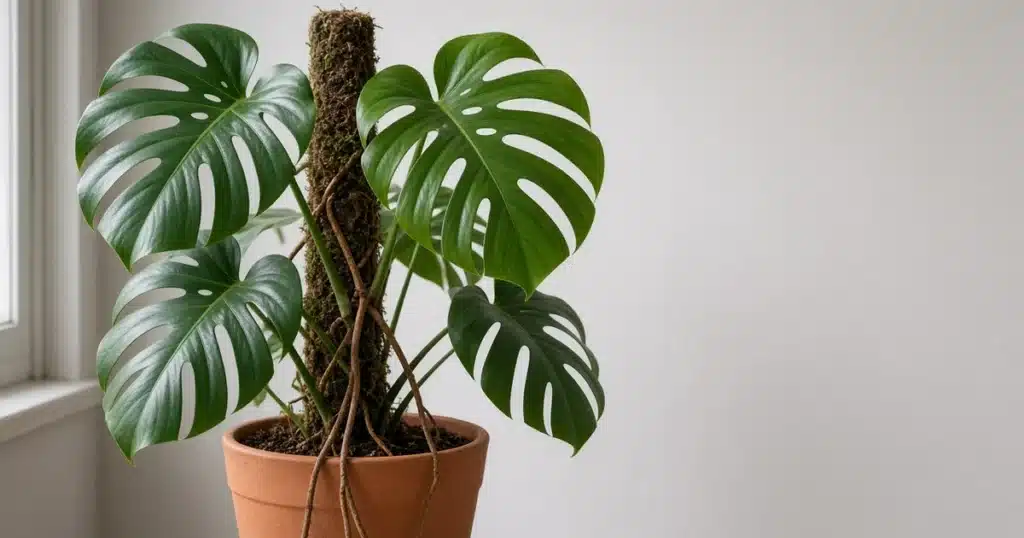
A hemiepiphyte spends part of its life as an epiphyte, growing on a tree, and part rooted in the ground. Most start high in a tree and send roots down to the soil. Others start on the ground and climb trees later. Strangler figs are the classic example, and Monstera and Philodendron grow the second way.
What is a hemiepiphyte?
The FODE 014 forestry notebook on BCcampus defines hemiepiphytes as plants that spend part of their lives as epiphytes and part rooted in the ground. It says the habit appears in more than 20 plant families and several hundred species.
There are two main paths. The notebook explains that most hemiepiphytes start out in the crown of a tree and produce roots that grow downward. These are called primary hemiepiphytes. Others start on the ground and later in life grow as epiphytes. It names Philodendron, Monstera and other members of the arum family as examples.
Roots do different work at each stage. For a look at root basics, see the importance of cannabis roots.
How is a hemiepiphyte different from an epiphyte?
A true epiphyte lives its whole life on another plant. The BCcampus notebook says epiphytes grow on other plants but, unlike parasites, take no nutrients or water directly from their host. UC Master Gardeners of Napa County lists orchids, bromeliads, anthuriums and a few ferns as classic epiphytes.
Epiphytes find food in other ways. The Napa Master Gardeners explain that some absorb much of what they need from the air through leaf structures called trichomes. Others catch loose organic matter, such as fallen leaves, which decays into a personal compost pile.
A hemiepiphyte, by contrast, connects to the soil at some point. That ground link gives it a steady supply of water and minerals. To see how water travels up through stems, read about cannabis xylem and phloem.
| Type | How it grows | Example |
|---|---|---|
| Primary hemiepiphyte | Starts in a tree crown, sends roots down to soil | Strangler fig (Ficus aurea) |
| Secondary hemiepiphyte | Starts on the ground, then climbs a tree | Monstera, Philodendron |
| True epiphyte | Lives on another plant without rooting in soil | Orchids, bromeliads |
Sources: BCcampus FODE 014 notebook, UC Master Gardeners of Napa County, NC State Extension.
How does a strangler fig grow?
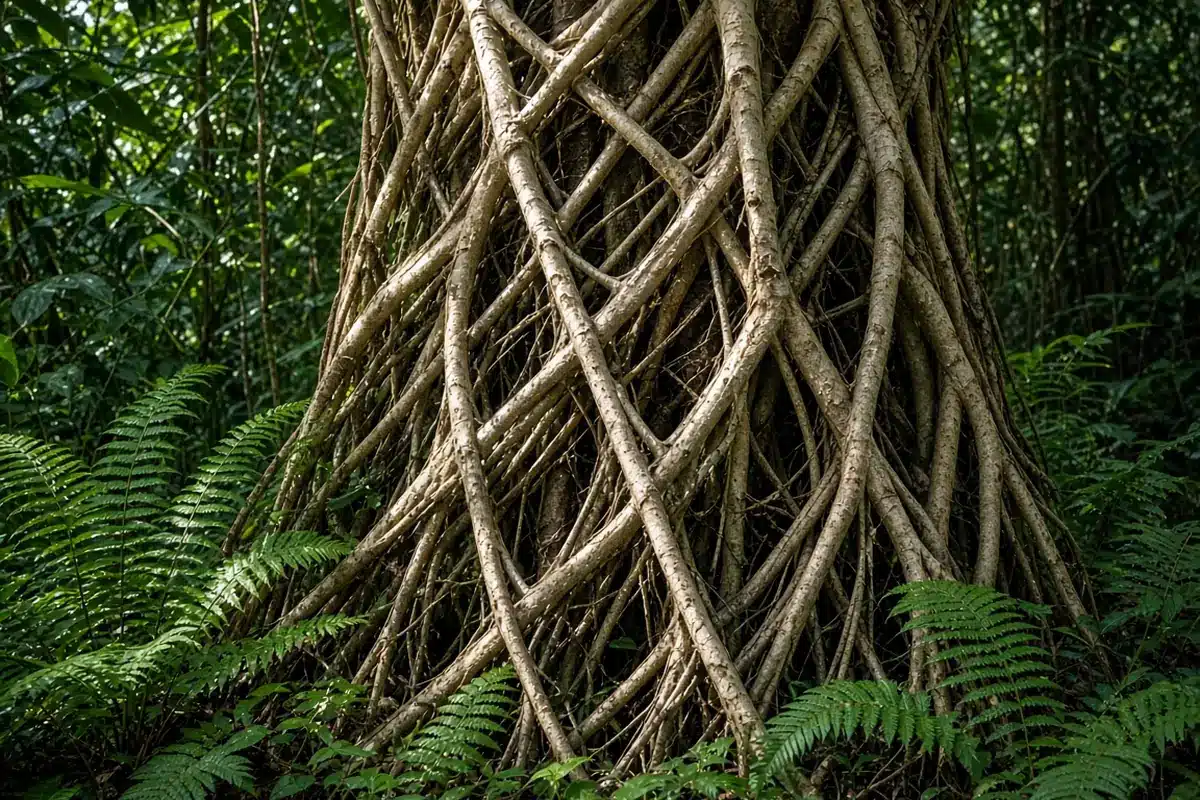
UF/IFAS Florida 4H describes the native strangler fig, Ficus aurea. Its seed lodges in cracks in the bark of a host tree, and cabbage palms are favorite hosts. The seedling sends out air roots that take in water and nutrients from the air and host. Eventually those roots reach the ground and develop their own underground root system.
Over time the fig can wrap the host. The BCcampus notebook says the roots of strangler figs may girdle the host trunk with a woody cylinder. That cylinder then holds up the fig’s crown after the host dies and decomposes. The Florida Museum at the University of Florida adds that these figs can grow from buried seeds.
Which houseplants are hemiepiphytes?
Monstera deliciosa is the most familiar. North Carolina State Extension says that in its native habitat it starts life as a terrestrial plant. It turns epiphytic once it touches a solid tree it can climb. It notes that solid support is necessary to stop the stems from breaking.
North Carolina State Extension gives clear care notes. Monstera likes 60 to 85 degrees F, mild brightness without direct sun and high humidity. It advises thorough watering, then letting the top quarter to one third of the mix dry. A humidifier or a tray of wet pebbles raises humidity indoors.
How to: step by step
- Learn whether your plant starts in trees or climbs from the ground.
- Give climbing types like Monstera a solid support.
- Guide stems and aerial roots toward the support as they grow.
- Place the plant in moderate, bright light out of direct sun.
- Raise humidity with a humidifier or a pebble tray.
- Water thoroughly, then let the top quarter to one third of the mix dry.
- Repot or prune in spring if needed.
Troubleshooting
Stems bending or breaking: the plant lacks support. North Carolina State Extension says Monstera needs solid support.
Dry leaf edges or slow growth: low humidity. Add a humidifier or pebble tray.
Soggy mix: too much water. Let the top quarter to one third dry between waterings.
Variegated plant fading: North Carolina State Extension says variegated cultivars need more light than green ones.
Two lives, one plant
A hemiepiphyte splits its life between tree and soil. Strangler figs root down from above, and Monstera climbs up from below. Give climbing houseplants support and humidity. For more plant structure basics, read cannabis leaf anatomy from Kind Seed Co.
Sources
- Topic 4.4: Epiphytes and hemiepiphytes, FODE 014 notebook, BCcampus
- Strangler fig, UF/IFAS Florida 4H Forest Ecology
- The strangler fig, Florida Museum Randell Research Center
- Monstera deliciosa, NC State Extension Gardener Plant Toolbox
- Epiphytes, UC Master Gardeners of Napa County
FAQ
Is monstera a hemiepiphyte?
Yes. North Carolina State Extension says Monstera deliciosa starts life as a terrestrial plant in its native habitat and turns epiphytic once it contacts a sturdy tree it can climb. The BCcampus forestry notebook lists Monstera among hemiepiphytes that start on the ground.
Do hemiepiphytes need soil?
At some stage, yes. The BCcampus notebook defines hemiepiphytes as plants that spend part of their lives as epiphytes and part rooted in the ground. Strangler figs start in trees and later root in soil, while Monstera starts in soil and climbs.
What is a strangler fig?
UF/IFAS Florida 4H says the strangler fig, Ficus aurea, starts when its seed lodges in the bark of a host tree. Air roots grow down to the ground and form their own root system. The fig may then cover the host tree with its own trunk.
How is an epiphyte different from a parasite?
The BCcampus notebook says epiphytes grow on other plants but, unlike parasites, take no nutrients or water directly from their host. UC Master Gardeners of Napa County says many epiphytes absorb what they need from the air or from decaying leaves.
How much humidity does a monstera need?
North Carolina State Extension says Monstera prefers high humidity, moderate brightness without direct sun and temperatures of 60 to 85 degrees F. A humidifier or a tray of wet pebbles helps raise humidity in dry indoor rooms.



