
What Is a Liana? Woody Climbing Vines Explained
The short answer
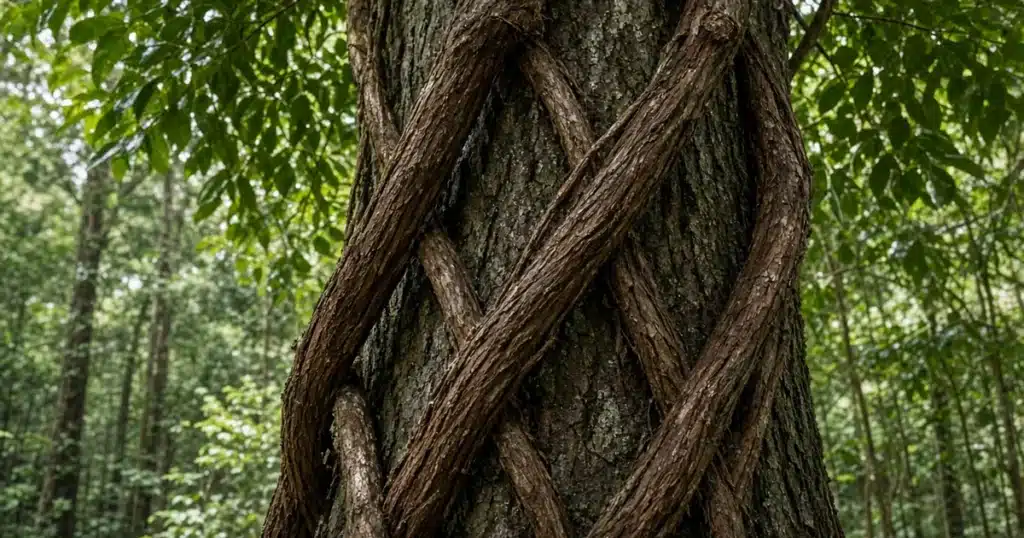
A liana is a woody vine that roots in the soil and climbs a tree or other support to reach light. The US National Park Service says lianas climb with twining stems, tendrils, adhesive roots, hooks or thorns. Temperate examples include wild grape, trumpet creeper and wisteria. In gardens, lianas need sturdy support and regular pruning.
What is a liana?
The US National Park Service defines lianas as woody vines that have roots in the soil but reach for light by growing on, over and around a tree, snag or other trellis. The key word is woody. Unlike soft annual vines, a liana builds a lasting stem that thickens year after year.
Utah State University Extension describes xylem as the wood of a tree, made of fibers, tracheids and vessels that carry water from the roots. Lianas carry water the same way, but through long, flexible stems instead of a self supporting trunk. To learn how those tissues work, see cannabis leaf anatomy.
Lianas can live a long time. At Congaree National Park in South Carolina, the Park Service reports wild grape vines almost 9.5 inches across. Growth projections suggest some could be over 240 years old.
How do lianas climb?
The National Park Service lists several climbing methods. Twining stems wrap around big branches or trunks. Tendrils grab smaller features such as twigs. Adhesive roots cling to rough surfaces like bark. Hooks and thorns snag their way upward.
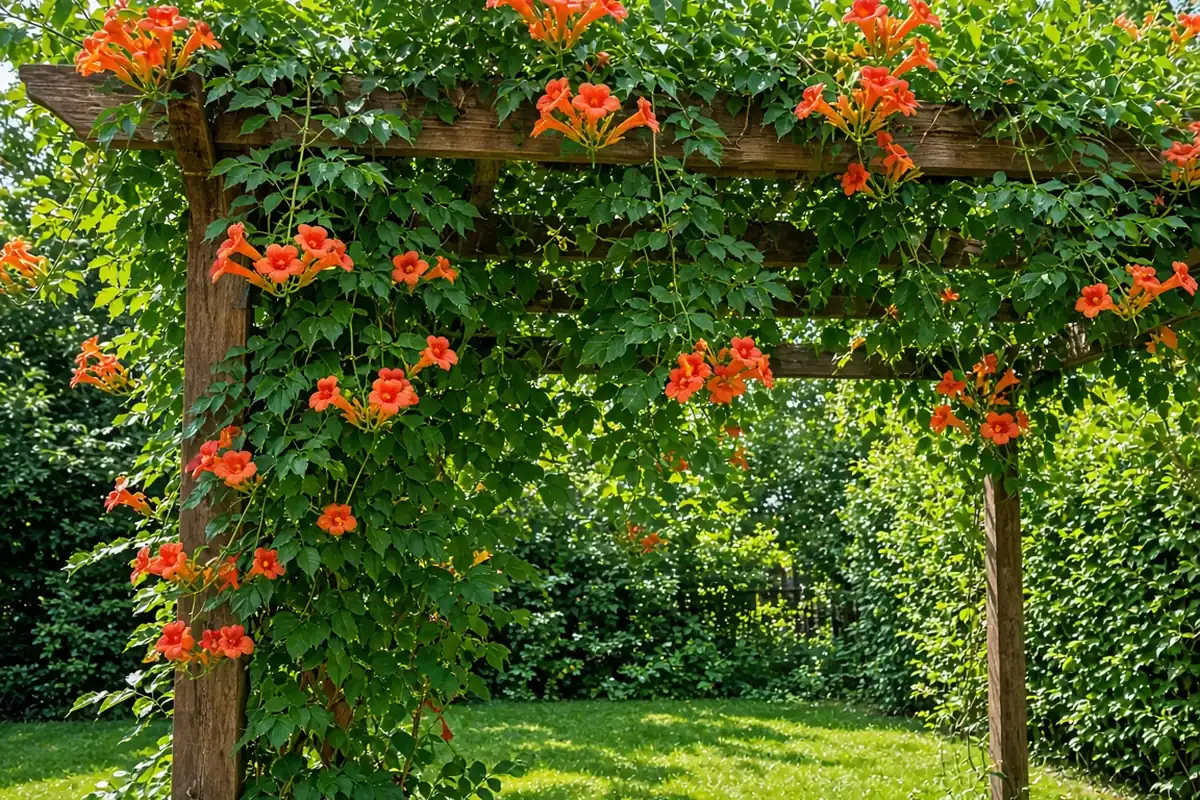
Each garden liana uses one main method. North Carolina State Extension says trumpet creeper attaches to structures and climbs by aerial rootlets. Its species name, radicans, is Latin for producing roots. American wisteria twines. North Carolina State Extension notes that American and Chinese wisteria twine counterclockwise, while Japanese wisteria twines clockwise.
| Plant | Climbing method | Garden note |
|---|---|---|
| Trumpet creeper (Campsis radicans) | Aerial rootlets that cling | Needs sturdy structures, aggressive spreader |
| American wisteria (Wisteria frutescens) | Twines counterclockwise | Grows to 40 feet or more, needs sturdy support |
| Wild grape | Grows over host trees | Common liana in Congaree floodplain forest |
Sources: North Carolina State Extension, US National Park Service.
Which lianas grow in gardens?
Trumpet creeper is a vigorous native choice. North Carolina State Extension calls it a dense, woody, deciduous perennial vine that grows easily in many soils. It blooms on new growth, so early spring pruning doesn’t affect flowering. It warns that mature plants produce considerable weight and the species spreads aggressively.
American wisteria is a gentler option. North Carolina State Extension says it isn’t as aggressive a spreader as Chinese wisteria. It does well on a solid surface in moist, well drained, slightly acidic soil in full sun. Vines may flower by the second or third year after planting, though it can take longer.
Some lianas cause trouble. The National Park Service names kudzu, Chinese wisteria, Japanese honeysuckle and English ivy as introduced lianas that outcompete native plants. Lianas also weigh heavily on host trees and add drag in high winds. Planning beds around large trees? Read growing cannabis near trees.
How to: step by step
- Learn how your vine climbs: twining, tendrils or clinging roots.
- Build or buy a sturdy support sized for a heavy mature vine.
- Guide young stems onto the support as they grow.
- Prune regularly to control size and shape.
- Do drastic wisteria pruning in spring, right after flowering.
- Train vines on trellises, not on trees you want to save.
- Skip invasive lianas such as kudzu and Chinese wisteria.
Troubleshooting
Vine pulling down its support: mature lianas get heavy. North Carolina State Extension says trumpet creeper needs sturdy structures, so build a sturdier frame.
Wisteria not flowering: causes include frost damage to buds, too much shade, young plants, improper pruning or overfertilizing, according to North Carolina State Extension.
Vine climbing into trees: prune it back. The Park Service notes lianas weigh on host trees and add wind drag.
Vine spreading across the yard: trumpet creeper is an aggressive spreader. Choose a less vigorous liana such as American wisteria.
Woody vines that reach for light
A liana is a woody vine rooted in the soil that climbs toward the sun. Match the support to its climbing style and weight, and prune on a regular schedule. Learn support basics in the art of cannabis trellising on the Kind Seed Co blog.
Sources
- Liana research at Congaree National Park, US National Park Service
- Campsis radicans (trumpet creeper), NC State Extension Gardener Plant Toolbox
- Wisteria frutescens (American wisteria), NC State Extension Gardener Plant Toolbox
- Tree and botanical glossary, Utah State University Extension Forestry
FAQ
Is a liana the same as a vine?
A liana is a type of vine. The US National Park Service defines lianas as woody vines that root in the soil and climb a tree, snag or trellis to reach light. Soft stemmed vines that die back each year are not usually called lianas.
Is grape a liana?
Yes. The National Park Service lists wild grape as one of three common lianas at Congaree National Park, along with trumpet creeper. Scientists there found wild grape vines almost 9.5 inches across, and growth projections suggest some could be over 240 years old.
Do lianas harm trees?
They can. The National Park Service says lianas compete with trees for light, water and nutrients. They weigh heavily on host trees, increase drag in high winds and can pull on a host tree when connected to another falling tree.
Is American wisteria less aggressive?
North Carolina State Extension says American wisteria is not as aggressive a spreader as Chinese wisteria. It is a twining woody vine that can reach 40 feet or more, so it still needs a sturdy support and regular pruning to control size.
When should I prune trumpet creeper?
North Carolina State Extension says trumpet creeper blooms on new growth, so early spring pruning will not affect flowering. Mature plants get heavy, so grow them on sturdy structures and prune to control spread.



