
What Is a Cushion Plant? Low Mounded Alpines Explained
The short answer
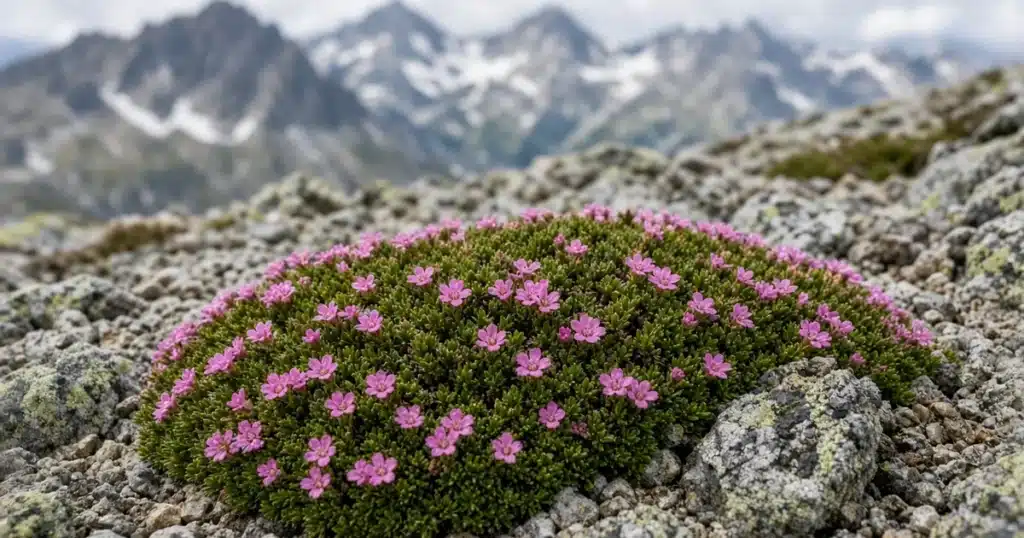
A cushion plant grows as a tight, low mound of densely packed stems and leaves. The USDA Forest Service says the shape shields tender parts from frost and wind, holds moisture and traps heat. Moss campion is a classic example. In gardens, cushion plants suit rock gardens and crevices with good drainage.
What is a cushion plant?
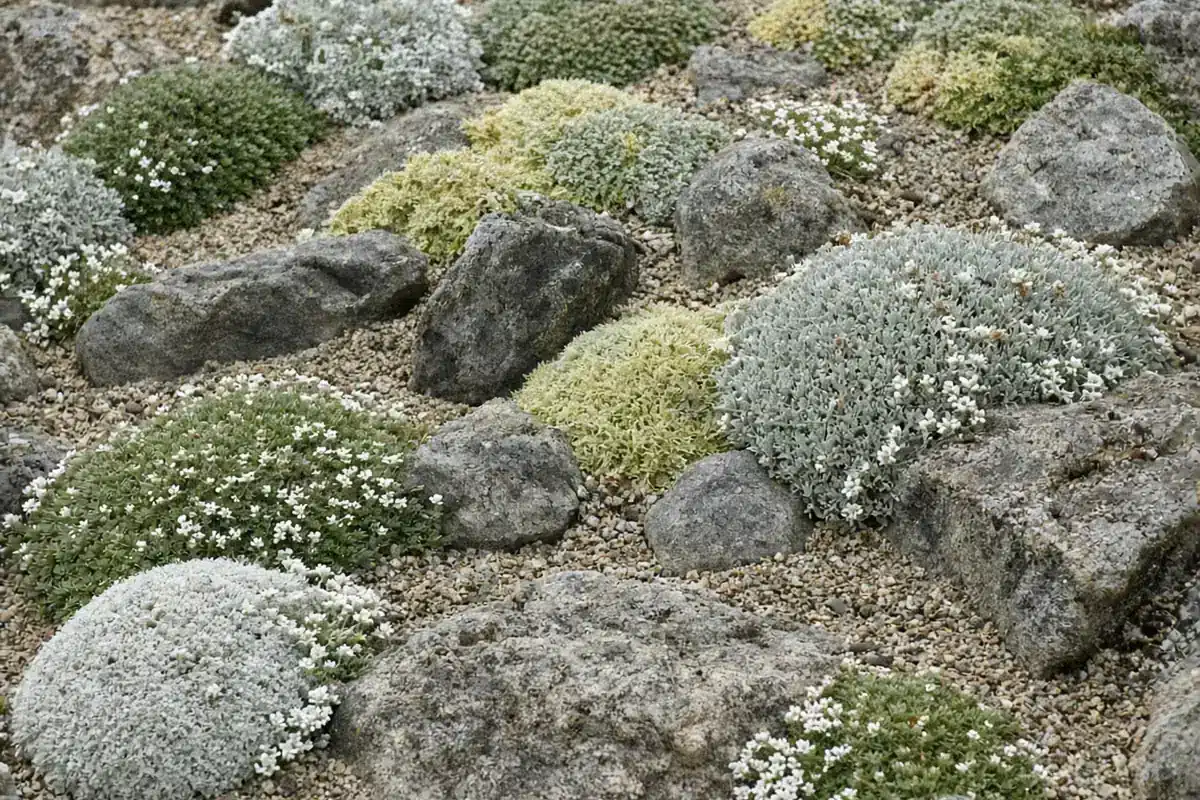
A cushion plant hugs the ground in a dense dome. The US National Park Service says cushion plants in Rocky Mountain National Park look like ground hugging clumps of moss. Only the outer layer of small leaves meets the weather.
The form is common in cold, windy places. The USDA Forest Service says many unrelated alpine plants have adopted a cushion like growth form, which suggests it works well in alpine tundra. Moss campion is its typical example, and it makes tidy little mounds with only its small leaves exposed.
Leaf shape and size shape how any plant handles sun and wind. For a closer look at leaf parts, see cannabis leaf anatomy.
How do cushion plants survive harsh conditions?
Alpine tundra is tough. The USDA Forest Service describes long winters with sub zero temperatures, blizzards and high winds. Summers are short, with frost possible at any time, drying winds and intense sunlight. Soils tend to be rocky, dry and nutrient poor. Most plants there are slow growing perennials.
The cushion shape answers those problems. According to the Forest Service, it shields tender parts from frost and high winds, retains moisture and holds in heat. Studies it cites found the temperature inside a cushion can be up to 10 degrees Celsius above the surrounding air.
Staying low matters too. The National Park Service says cushion plants escape the winds blowing a few inches above them. They may have long taproots that reach deep into rocky soil. North Carolina State Extension says moss campion tolerates temperatures as low as minus 30 to minus 40 degrees Fahrenheit.
Which cushion plants suit rock gardens?
| Plant | Habitat | Garden note |
|---|---|---|
| Moss campion (Silene acaulis) | Arctic, high mountains and alpine tundra | Full sun, low humidity, cool temperatures |
| Moss phlox (Phlox subulata) | Dry, rocky or sandy areas, ledges and slopes | Full sun, some dappled shade in hot, humid summers |
Sources: North Carolina State Extension, USDA Forest Service.
Moss campion is the true alpine choice. North Carolina State Extension calls it a compact, cushion like or mat forming evergreen perennial with tiny pink flowers in summer. It does well in moist, well drained, loamy or sandy soils with a neutral or alkaline pH. It’s a popular rock garden plant in cool climates for crevices, stepping stones or container edges.
Moss phlox gives a similar look in warmer areas. North Carolina State Extension describes a dense, spreading, mat forming perennial up to 6 inches tall. It likes sandy and gravelly soil and handles hot, dry conditions better than other phlox. It suits rock gardens, edgings and low rock walls. For more on gritty mixes, read about sandy soil for cannabis.
How to: step by step
- Pick cushion or mat plants suited to your climate.
- Plant in well drained, sandy or gravelly soil.
- Give full sun, with some dappled shade for moss phlox in hot, humid summers.
- Tuck alpine types like moss campion into rock crevices.
- Check drainage before planting. See how to check drainage in cannabis beds.
- Cut moss phlox stems back by half after flowering for denser growth.
- Route foot traffic around the mounds.
Troubleshooting
Moss campion failing in a warm garden: it prefers full sun, low humidity and cool temperatures. Grow moss phlox in hotter areas instead.
Moss phlox getting loose and open: trim stems by half after bloom to encourage dense growth, as North Carolina State Extension suggests.
Stippled leaves in hot, dry weather: spider mites can be a problem for moss phlox in those conditions.
Damaged leaves in wet, humid weather: North Carolina State Extension says nematodes can harm moss phlox leaves then.
Crushed or bare patches: the National Park Service says repeated footsteps often destroy tundra plants. Route paths away from cushions.
Small mounds, big adaptation
A cushion plant packs its stems into a low dome to hold heat and moisture and dodge the wind. Give garden cushions sun, sharp drainage and room from foot traffic. The Kind Seed Co blog has more plant structure basics.
Sources
- Moss campion (Silene acaulis), plant of the week, USDA Forest Service
- Alpine tundra ecosystem, Rocky Mountain National Park, US National Park Service
- Silene acaulis (moss campion), NC State Extension Gardener Plant Toolbox
- Phlox subulata (moss phlox), NC State Extension Gardener Plant Toolbox
FAQ
Is moss phlox a cushion plant?
It grows in a similar way. North Carolina State Extension describes moss phlox as a dense, spreading, mat forming perennial up to 6 inches tall. It is lower and wider than a true alpine cushion like moss campion, but it fills the same role in rock gardens and edgings.
Why do cushion plants grow so slowly?
They come from harsh places. According to the USDA Forest Service, alpine tundra features long cold winters, short summers and rocky, dry, nutrient poor soils. Most plants there are slow growing perennials. A tight cushion form helps them hold heat and moisture in those conditions.
Can cushion plants grow in containers?
Some can. North Carolina State Extension says moss campion may be used in rocky crevices, rambling over stepping stones or spilling over the sides of a container. It prefers full sun, cool temperatures and moist, well drained soil.
How warm is the inside of a cushion plant?
Warmer than the air around it. The USDA Forest Service says studies have shown the temperature within a plant cushion can be up to 10 degrees Celsius higher than the ambient temperature. That heat helps tender growth survive cold alpine summers.
Where does moss campion grow wild?
The USDA Forest Service says moss campion is common throughout the northern arctic and the high mountains of Europe and North America. In the United States it grows in alpine tundra in the West and in New England, often in rocky mountain crevices.



