
What Is a Pome Fruit? Apples, Pears and Quince Explained
The short answer
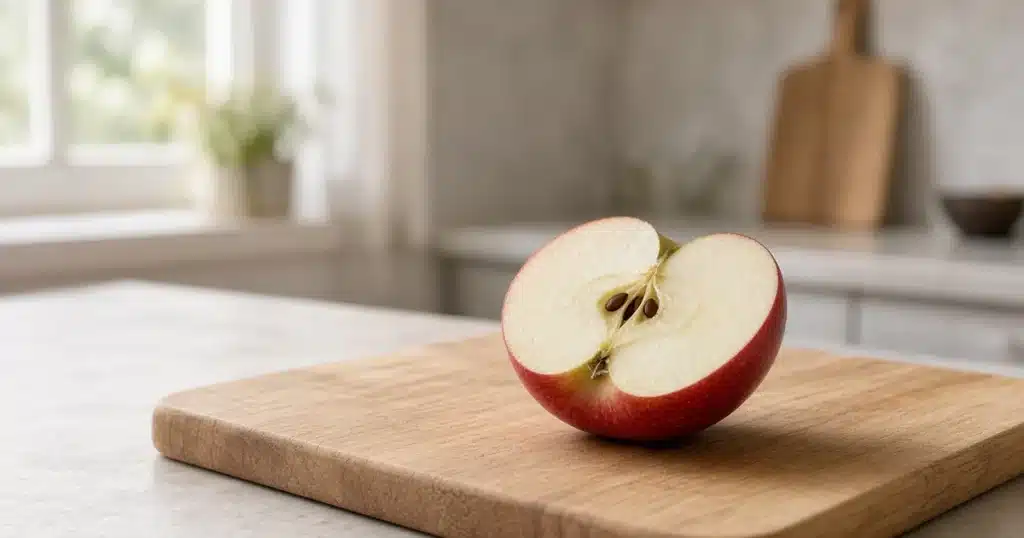
A pome fruit is a fleshy fruit with a papery core holding several seeds, surrounded by flesh that grows mostly from tissue around the ovary. Apples, pears and quince are pomes. Pomes differ from drupes, which have one hard pit, and from true berries, which have seeds spread through soft flesh.
Learning fruit types helps when reading orchard guides, pruning books and seed catalogs. Pomes are a good place to start.
What is a pome fruit?
In most fruits, the flesh grows from the ovary wall, the part of the flower that holds the seeds. Pomes are different. Most of their flesh grows from the hypanthium, a cup of tissue at the base of the flower that surrounds the ovary.
The ovary itself becomes the core. Its walls turn papery or leathery and form chambers that hold the seeds.
The University of Wisconsin Botany 130 page on fruits describes pomes as accessory fruits, since much of the flesh comes from tissue other than the ovary.
Which fruits are pomes?
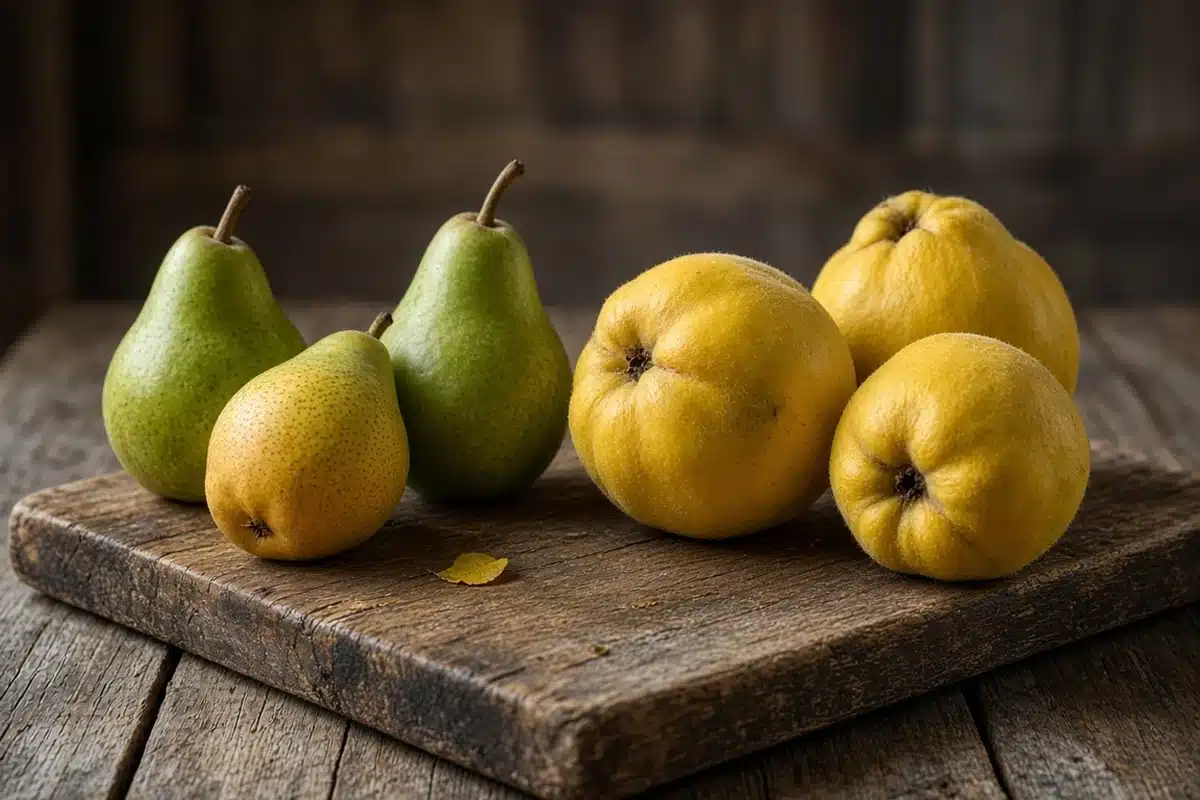
Apples, pears and quince are the classic pomes. Others include crabapples, medlars, loquats, serviceberries, hawthorns and mountain ash.
All of these belong to one subgroup of the rose family. Roses themselves form a fruit called a hip, which is related.
| Type | Structure | Examples |
|---|---|---|
| Pome | Papery core with seeds, flesh from tissue around ovary | Apple, pear, quince |
| Drupe | One hard pit with a seed inside | Peach, cherry, plum |
| Berry | Seeds spread through soft flesh | Tomato, grape, blueberry |
| Aggregate | Many small drupes from one flower | Raspberry, blackberry |
Sources: University of Wisconsin Botany, Purdue Extension.
How do pomes differ from drupes?
Drupes have a single hard pit, or stone, at the center. The pit is the hardened inner wall of the ovary. Inside sits one seed. Peaches, cherries and plums are drupes.
Pomes have a core with several seeds in papery chambers. There’s no hard stone.
The Purdue Extension article on gardening terms explains common fruit type terms gardeners meet in catalogs and guides, including pome and drupe.
How do you see the parts of a pome?
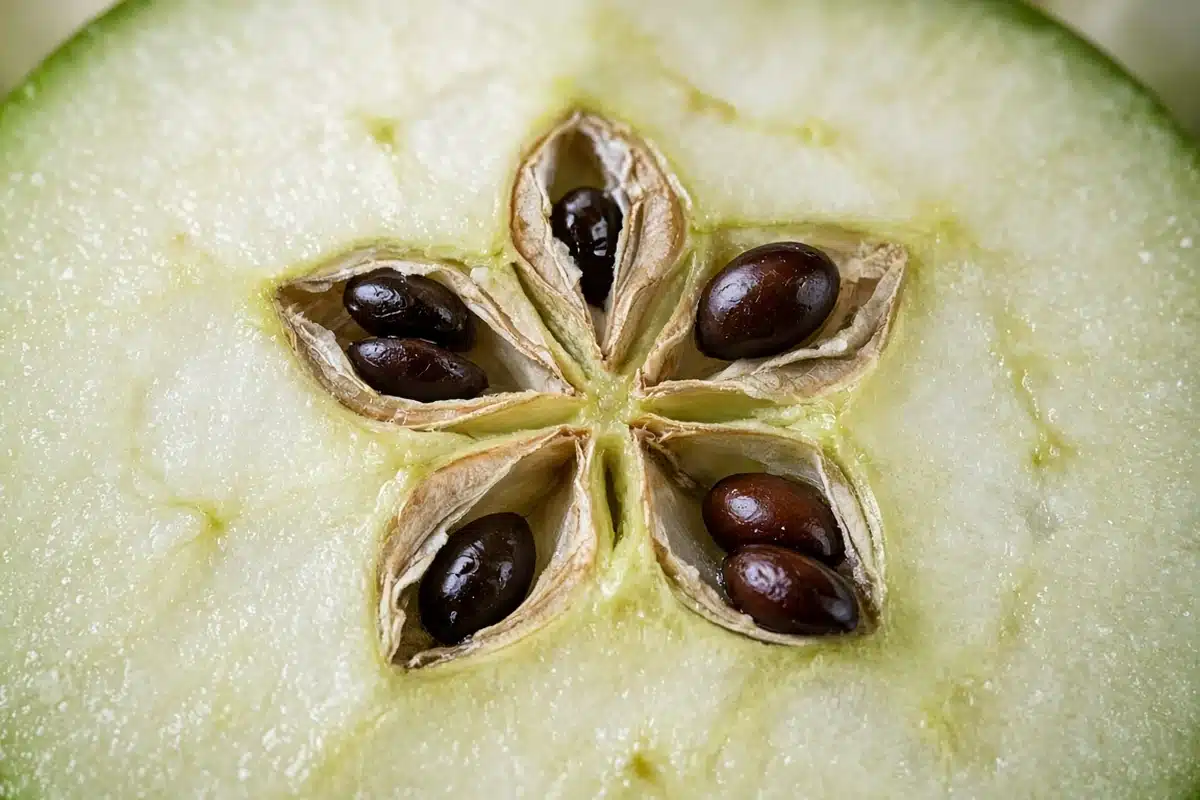
Cut an apple across its middle, not from stem to base. You’ll see a five pointed star at the center. Each point is a chamber of the core, and each chamber may hold one or two seeds.
Around the core, a faint ring of dots marks the vascular bundles. That ring roughly shows the border between core tissue and the flesh that grew from the hypanthium.
At the bottom of the apple, opposite the stem, sit dry remains of the sepals. They mark where the flower was.
The Purdue Extension Master Gardener illustrated glossary of plant identification terms shows flower parts like sepals, ovary and receptacle that help explain pome structure.
Is an apple a true fruit?
Botanists call fruits like apples accessory fruits, since much of the flesh comes from tissue outside the ovary. A true fruit develops only from the ovary, and both are fruits in the everyday sense.
How do seeds form in pomes?
Each pollinated ovule becomes a seed. Apples have up to ten seeds, two per chamber. Poor pollination can leave fewer seeds. Uneven seed development may contribute to lopsided fruit.
Our post on cannabis seed anatomy explains the parts of a seed. Our post on what good cannabis seeds look like covers how mature seeds look.
How do flowers become fruit?
After pollination, the flower drops its petals. The base swells and becomes the fruit. Our post on how cannabis buds form explains flower development in another plant, a useful comparison.
Why does fruit type matter?
Fruit type ties to how trees grow and bear. Pome trees such as apples and pears bear mainly on spurs. Drupe trees such as peaches bear on one year old wood. Pruning guides often group trees by fruit type.
How do pomes ripen?
Apples often ripen on the tree. Many pears ripen well off the tree. Pears picked mature but firm, then stored cool, soften evenly. Pears left on the tree too long can turn gritty or brown at the core.
Quince stays hard and sour when raw. Most people cook it, which turns the flesh soft, fragrant and pink.
How to: step by step
- Cut an apple across its middle.
- Find the papery core and seeds.
- Note the fleshy tissue around the core.
- Compare with a peach pit.
- Learn other pome fruits.
- Use fruit type terms in tree guides.
Try the same cut on a pear and a quince to see how they compare.
Troubleshooting
Confused with drupes. One has a pit and one has a core. Check the center.
Mixed terms on labels. Common names vary. Use botany guides.
Unsure of a fruit. The type is unusual. Check a glossary.
Seeds missing. Pollination was poor. Plant a pollinizer.
Lopsided apples. Some chambers lacked seeds. Improve pollination.
Once you know the pome, apples and pears make more sense from flower to fruit. Kind Seed Co shares more garden projects in outdoor growing.
Sources
- Fruits (Botany 130), University of Wisconsin Botany, Fruits (Botany 130)
- Some gardening terms you may have seen, Purdue Extension, Some gardening terms you may have seen
- Plant identification terminology: an illustrated glossary, Purdue Extension Master Gardener Program, Plant identification terminology
FAQ
Is an apple a true fruit?
It is an accessory fruit, since much of the flesh grows from tissue outside the ovary.
Are pomes all in the rose family?
Yes. They belong to one subgroup of the rose family.
Is a quince a pome?
Yes. Quince has a papery core like apples and pears.
What is a drupe?
A fleshy fruit with one hard pit around a seed, like a peach.
How many seeds does an apple have?
Up to ten, two in each of five chambers.



