
What Is Pricking Out? Separating Crowded Seedlings
The short answer
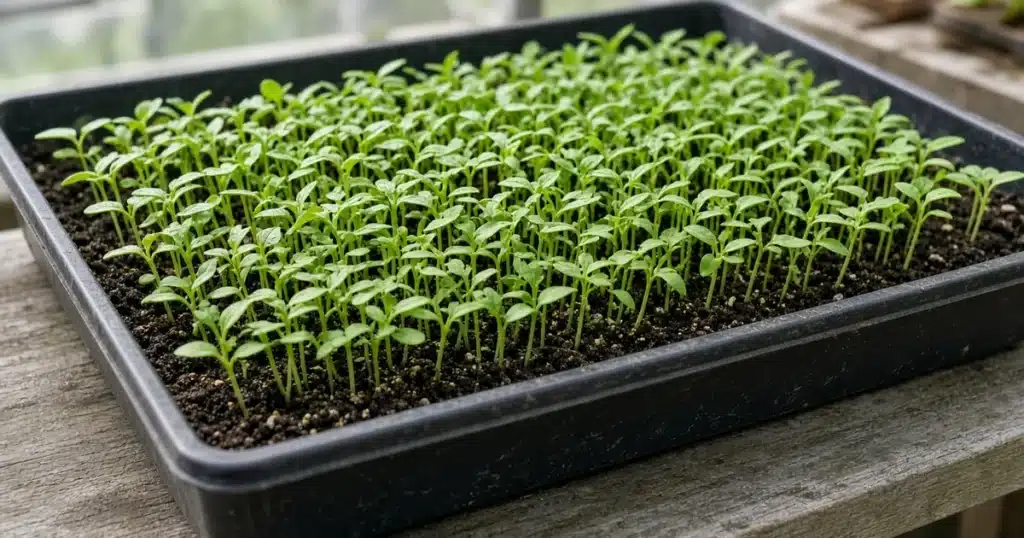
Pricking out means gently lifting young seedlings from a crowded tray and moving each into its own pot or cell. Do it once seedlings have their first true leaves. Loosen roots with a small tool and hold each seedling by a leaf, never the stem, since stems crush easily.
Many gardeners sow small seeds thickly in one tray, then move the sturdiest seedlings to their own pots. Pricking out is the step that makes that work.
What does pricking out mean?
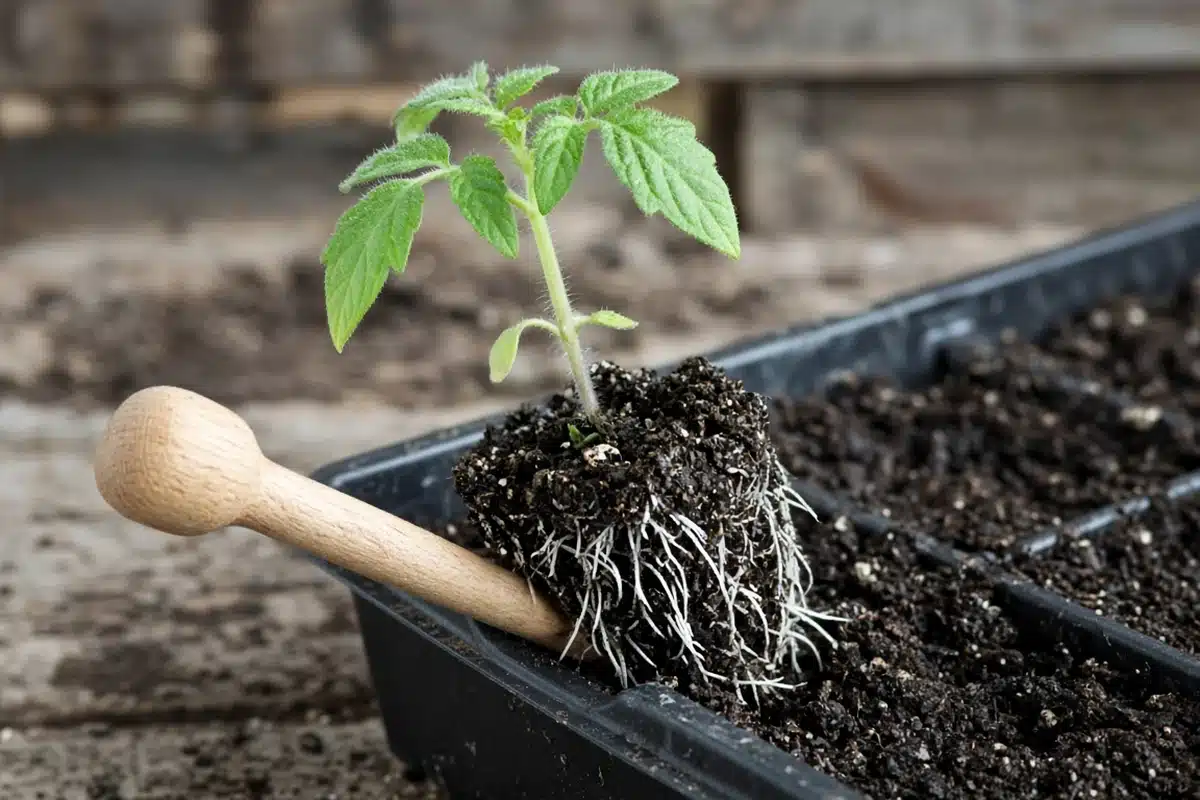
The term comes from the old practice of using a small pointed stick to lift seedlings. Today, gardeners use a pencil, a chopstick, a plant label or a small dibber.
Pricking out separates seedlings so each has room for roots and leaves. Crowded seedlings compete for light and water and grow weak and leggy.
The UMN Extension guide to starting seeds indoors explains sowing in flats and moving seedlings to bigger containers once they grow true leaves.
When should you prick out seedlings?
Wait until the first true leaves appear. The first leaves you see are seed leaves, or cotyledons. They often look simple and rounded. True leaves come next and look like the plant’s mature leaves.
Our post on cannabis seedling true leaves shows how to tell seed leaves from true leaves.
Don’t wait too long. Seedlings left crowded for weeks tangle their roots and stretch. Younger seedlings recover faster.
The University of Maryland Extension page on care of vegetable seedlings recommends moving seedlings to bigger containers once true leaves develop.
| Term | Meaning | Source |
|---|---|---|
| Seed leaves | First leaves from the seed, also called cotyledons | UMN Extension |
| True leaves | Leaves that look like the mature plant’s | UMN Extension |
| Pricking out | Moving seedlings from a tray to their own pots | University of Maryland Extension |
| Thinning | Removing extra seedlings in place | Clemson Cooperative Extension |
| Hardening off | Gradually moving seedlings outdoors | Clemson Cooperative Extension |
Sources: UMN Extension, University of Maryland Extension, Clemson Cooperative Extension.
How do you handle seedlings?
Water the tray an hour or so before you start. Moist mix holds together and slides away from roots more easily.
Slide your tool under a small clump of seedlings and lift. Gently tease one seedling free.
Hold each seedling by a leaf, ideally a seed leaf. A torn leaf can grow back. A crushed stem cannot.
Make a hole in the new pot deep enough for the roots. Lower the seedling in, with roots pointing down. Set it at the same depth or a little deeper. Firm the mix gently around it.
Fill new pots with fresh seed starting or potting mix. Our post on seed starting mix for cannabis covers what makes a good mix.
What happens after pricking out?
Water gently to settle the mix. Shade seedlings from harsh sun for a few days while roots recover.
A little drooping can follow transplanting, but watch for fresh growth as roots settle.
Return them to bright light once they stand up again. Later, as they grow, they may need another move to a bigger pot. Our post on potting up cannabis seedlings explains that step.
Is pricking out the same as thinning?
No. Thinning removes extra seedlings and leaves the rest in place. Pricking out moves seedlings so you save more of them.
The Clemson Cooperative Extension HGIC fact sheet on starting seeds indoors covers both thinning and transplanting seedlings.
Can all seedlings be pricked out?
Most can. Tomatoes, peppers, lettuce, cabbage and many flowers handle it well.
Some plants dislike root disturbance. Squash, cucumbers, melons and beans often sulk after moving. Sow those into their own pots.
What tool works well?
A pencil, chopstick, plant label or small dibber all work. Pick something narrow enough to slide between seedlings.
How do you prick out from cell trays?
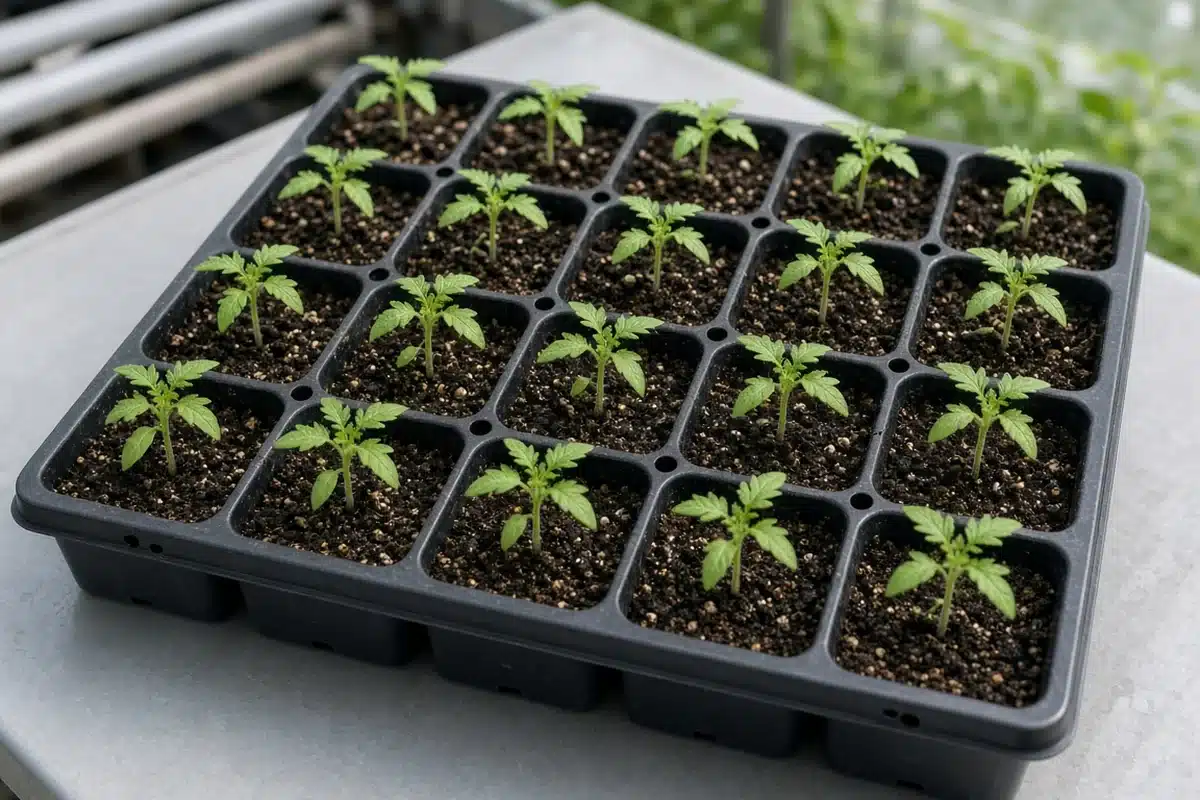
Some gardeners sow two or three seeds per cell in a plug tray. When several sprout, they can snip extras at soil level or prick out the spares into new cells.
Push a pencil up through the drainage hole to pop the plug out. Then separate the seedlings gently with your fingers or tool.
Plug trays hold roots in neat cubes, so seedlings move with less disturbance than from an open flat.
How many seedlings should you save?
Sow more than you need, since not every seed sprouts. When pricking out, save the sturdiest seedlings with short stems and healthy green leaves. Skip any that look pale, twisted or stretched.
Saving a few extras gives you spares in case some fail after moving.
How to: step by step
- Wait until the first true leaves form.
- Water the tray before starting.
- Loosen roots with a small tool.
- Hold each seedling by a leaf.
- Plant at the same depth in a new pot.
- Water gently and shade from harsh sun.
Label each pot as you go, since seedlings look alike when small.
Troubleshooting
Seedlings wilt. Roots were damaged. Shade for a few days.
Broken stems. They were held by the stem. Hold by leaves.
Slow regrowth. Pricking out was delayed. Do it earlier.
Tangled roots. Seed was sown thick. Sow thinner next time.
Leggy seedlings. Light is low. Move closer to light.
Pricking out turns a crowded tray into sturdy young plants ready for the garden. Kind Seed Co shares more garden projects in outdoor growing.
Sources
- Care of vegetable seedlings, University of Maryland Extension, Care of vegetable seedlings
- Starting seeds indoors, UMN Extension, Starting seeds indoors
- Starting seeds indoors, Clemson Cooperative Extension HGIC, Starting seeds indoors
FAQ
What are true leaves?
The leaves after the seed leaves. They look like the mature plant's leaves.
Can all seedlings be pricked out?
Most can. Squash, cucumbers and beans dislike it.
Is pricking out the same as thinning?
No. Thinning removes extras. Pricking out moves them.
What tool works well?
A pencil, chopstick or small dibber.
Why hold seedlings by a leaf?
A torn leaf regrows. A crushed stem does not.



